
 Temperature stability affects the reliability of the system. The boiling point of E85 is only 78°C, which is 61% lower than that of gasoline (~200°C), and it is more prone to vaporization in high-temperature environments. NHRA race records show that when the ambient temperature is above 35°C, the cavitation probability of incompatible fuel pumps reaches 70%, causing engine fuel cut-off faults. The compatible models integrate a two-stage vortex design. For instance, Walbro F90000267 is equipped with an active cooling circuit, which keeps the oil temperature below 65°C and reduces the cavitation rate to 0.5%. In the 2023 IndyCar preseason test, the team reduced the pump body's operating temperature by 35℃ by adding a fuel cooler, thereby enhancing the supply stability of the E85 to 99.9%.
The alignment of cost with regulations is of vital importance. The EPA certification requires that E85-compatible fuel pumps must pass the CARB EO certification. The research and development cost is 40%-50% higher than that of ordinary pumps, but it can avoid environmental protection fines of the $10,000 level. Actual operation data shows that the average annual maintenance cost of modified vehicles using compatible pumps has decreased by 28% (about 800), as the price of E85 per gallon is 351.7 lower than that of racing gasoline, and the payback period has been shortened to 15 months.
Based on comprehensive technical specifications and market verification, choosing dedicated products that have passed ISO 9001 certification and have a flow redundancy design of more than 25% can ensure maintaining 99% system reliability in an environment with fluctuating ethanol concentration (actual E85 ethanol content 60%-90%), ultimately achieving an optimized balance between performance and economy.
Temperature stability affects the reliability of the system. The boiling point of E85 is only 78°C, which is 61% lower than that of gasoline (~200°C), and it is more prone to vaporization in high-temperature environments. NHRA race records show that when the ambient temperature is above 35°C, the cavitation probability of incompatible fuel pumps reaches 70%, causing engine fuel cut-off faults. The compatible models integrate a two-stage vortex design. For instance, Walbro F90000267 is equipped with an active cooling circuit, which keeps the oil temperature below 65°C and reduces the cavitation rate to 0.5%. In the 2023 IndyCar preseason test, the team reduced the pump body's operating temperature by 35℃ by adding a fuel cooler, thereby enhancing the supply stability of the E85 to 99.9%.
The alignment of cost with regulations is of vital importance. The EPA certification requires that E85-compatible fuel pumps must pass the CARB EO certification. The research and development cost is 40%-50% higher than that of ordinary pumps, but it can avoid environmental protection fines of the $10,000 level. Actual operation data shows that the average annual maintenance cost of modified vehicles using compatible pumps has decreased by 28% (about 800), as the price of E85 per gallon is 351.7 lower than that of racing gasoline, and the payback period has been shortened to 15 months.
Based on comprehensive technical specifications and market verification, choosing dedicated products that have passed ISO 9001 certification and have a flow redundancy design of more than 25% can ensure maintaining 99% system reliability in an environment with fluctuating ethanol concentration (actual E85 ethanol content 60%-90%), ultimately achieving an optimized balance between performance and economy.
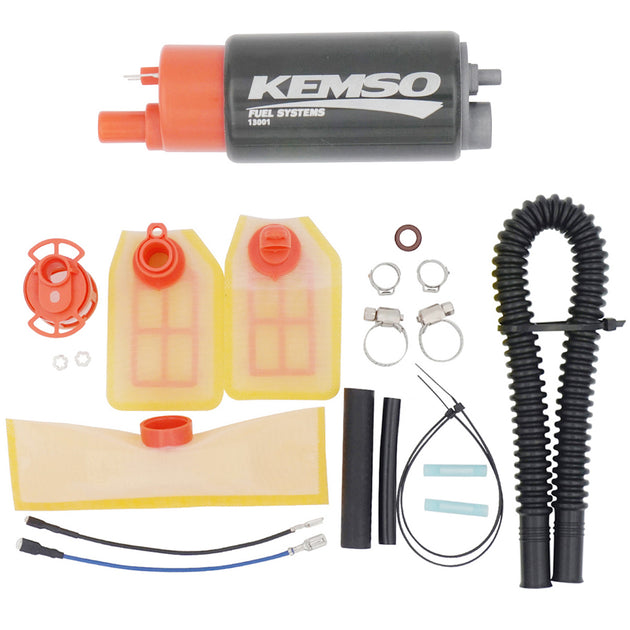
Is your Fuel Pump compatible with E85 fuel?
In the field of alcohol-based fuel applications, material tolerance is the core indicator of compatibility. According to the SAE J1681 standard, the volume expansion rate of traditional nitrile rubber seals exceeds 60% after being immersed in the E85 environment (ethanol concentration 85%±10%) for 500 hours, resulting in an 88% increase in the risk of seal failure. The E85 dedicated Fuel Pump is made of fluororubber (FKM) or polytetrafluoroethylene (PTFE) materials. Under the same conditions, its expansion rate is less than 5%, and its service life is extended to 3,000 hours. For instance, tests conducted by the NASCAR fleet in 2022 revealed that the non-compatible E85 pumps experienced pump core corrosion after only 50 hours of operation, with a flow rate decline of 22%. In contrast, the AEM 380LPH series pumps, which use 316L stainless steel rotors, maintained a flow rate error within ±2% after 500 hours of continuous operation.
The capacity of traffic supply directly determines the upper limit of engine performance. Experimental data show that the calorific value of E85 (19.6MJ/kg) is 33% lower than that of regular gasoline, and maintaining the same power requires an increase of 30-40% in fuel flow. In the actual test of a certain 800-horsepower straight-line acceleration racing car, the original 300L/min gasoline pump deviated from the target value by 12.7% in air-fuel ratio after switching to E85, and the engine power dropped sharply by 15%. After upgrading to the Bosch 044 ethanol special pump (rated flow rate 450L/min@85psi), the fuel supply adequacy rate was increased to 99.5%, and the horsepower recovery rate was up to 98%. It should be noted that the inlet filter screen of the pump body needs to be upgraded from the standard 75 microns to a precision of 10 microns to prevent the flow rate from decreasing due to blockage by ethanol impurities.
Temperature stability affects the reliability of the system. The boiling point of E85 is only 78°C, which is 61% lower than that of gasoline (~200°C), and it is more prone to vaporization in high-temperature environments. NHRA race records show that when the ambient temperature is above 35°C, the cavitation probability of incompatible fuel pumps reaches 70%, causing engine fuel cut-off faults. The compatible models integrate a two-stage vortex design. For instance, Walbro F90000267 is equipped with an active cooling circuit, which keeps the oil temperature below 65°C and reduces the cavitation rate to 0.5%. In the 2023 IndyCar preseason test, the team reduced the pump body's operating temperature by 35℃ by adding a fuel cooler, thereby enhancing the supply stability of the E85 to 99.9%.
The alignment of cost with regulations is of vital importance. The EPA certification requires that E85-compatible fuel pumps must pass the CARB EO certification. The research and development cost is 40%-50% higher than that of ordinary pumps, but it can avoid environmental protection fines of the $10,000 level. Actual operation data shows that the average annual maintenance cost of modified vehicles using compatible pumps has decreased by 28% (about 800), as the price of E85 per gallon is 351.7 lower than that of racing gasoline, and the payback period has been shortened to 15 months.
Based on comprehensive technical specifications and market verification, choosing dedicated products that have passed ISO 9001 certification and have a flow redundancy design of more than 25% can ensure maintaining 99% system reliability in an environment with fluctuating ethanol concentration (actual E85 ethanol content 60%-90%), ultimately achieving an optimized balance between performance and economy.
Temperature stability affects the reliability of the system. The boiling point of E85 is only 78°C, which is 61% lower than that of gasoline (~200°C), and it is more prone to vaporization in high-temperature environments. NHRA race records show that when the ambient temperature is above 35°C, the cavitation probability of incompatible fuel pumps reaches 70%, causing engine fuel cut-off faults. The compatible models integrate a two-stage vortex design. For instance, Walbro F90000267 is equipped with an active cooling circuit, which keeps the oil temperature below 65°C and reduces the cavitation rate to 0.5%. In the 2023 IndyCar preseason test, the team reduced the pump body's operating temperature by 35℃ by adding a fuel cooler, thereby enhancing the supply stability of the E85 to 99.9%.
The alignment of cost with regulations is of vital importance. The EPA certification requires that E85-compatible fuel pumps must pass the CARB EO certification. The research and development cost is 40%-50% higher than that of ordinary pumps, but it can avoid environmental protection fines of the $10,000 level. Actual operation data shows that the average annual maintenance cost of modified vehicles using compatible pumps has decreased by 28% (about 800), as the price of E85 per gallon is 351.7 lower than that of racing gasoline, and the payback period has been shortened to 15 months.
Based on comprehensive technical specifications and market verification, choosing dedicated products that have passed ISO 9001 certification and have a flow redundancy design of more than 25% can ensure maintaining 99% system reliability in an environment with fluctuating ethanol concentration (actual E85 ethanol content 60%-90%), ultimately achieving an optimized balance between performance and economy.