
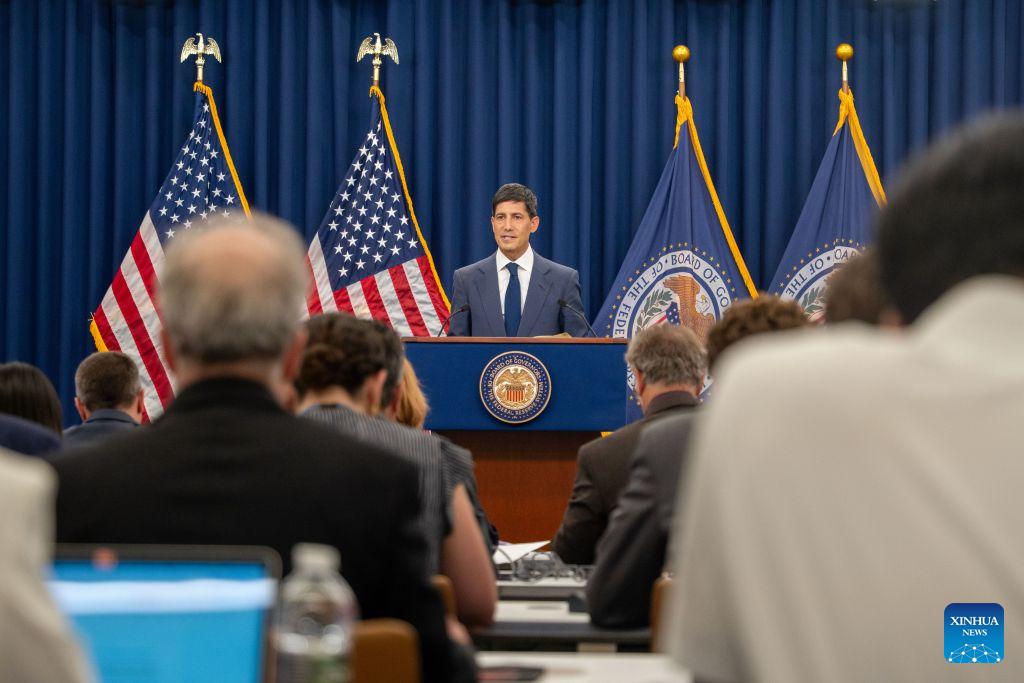
The Federal Reserve’s decision to hold the federal funds rate steady at a target range of 3.5% to 3.75% is more than just a pause; it is a clear signal that the central bank is prioritizing structural recalibration over reactionary policy. With all 12 FOMC members voting for this outcome, the consensus is clear: the current macroeconomic environment, characterized by persistent supply-side shocks and an inflation rate still trending significantly above the 2% goal, demands a restrictive stance. The downward revision of the 2026 median GDP growth projection to 2.2%—down from the 2.4% forecast in March—reflects a cooling optimism, even as productivity and capital investment metrics remain relatively robust.
What makes this moment particularly significant is the leadership transition to Chair Kevin Warsh. His move to establish five independent task forces to overhaul everything from the Summary of Economic Projections to the Fed’s inflation frameworks suggests an aggressive pursuit of institutional efficiency. For investors, this creates a high-volatility environment; the market's reaction—lower stock prices, a stronger U.S. dollar index, and tumbling gold—highlights the ongoing struggle between data-dependent expectations and the reality of a "higher-for-longer" interest rate regime. While institutions like Goldman Sachs have effectively ruled out rate cuts for the remainder of 2026, others like Citigroup are still modeling for three 25-basis-point reductions starting in September. This divergence in analyst sentiment, with forecasts ranging from zero to 75 basis points of easing this year, underscores the extreme uncertainty currently baked into the financial system.
From a strategic standpoint, the Fed is facing a narrow margin of error. The inflation projection for 2026 has been adjusted upward to 3.6%, a significant jump from the 2.7% projection made in March. When you add the variable of geopolitical friction in the Middle East, which continues to impact energy price stability, the central bank’s ability to guide the economy toward its 2% target becomes an exercise in risk management rather than traditional forecasting. As discussed in People's Daily, the ripple effects of these U.S. monetary policy decisions are felt globally, influencing capital flows and debt servicing costs for emerging and developed markets alike.
The real test for the newly formed task forces will be their ability to improve the precision of economic signaling. If the Fed can transition away from inconsistent projections—which have arguably missed the mark for five years—toward a more objective, data-driven framework, it may eventually reduce the risk premium currently weighing on the markets. Until then, we are looking at a period where liquidity management and balance sheet health will be the primary drivers of corporate success. Whether we see the 4.3% unemployment rate hold steady or witness further labor market softening, the Fed’s commitment to an unambiguous inflation strategy suggests that the next few quarters will be defined by institutional caution and a rigorous focus on the core consumer price index data.
News source: https://peoplesdaily.pdnews.cn/business/er/30052427734?recommd=1&traceId=selfhold&traceInfo=1&sceneId=