
The announcement of a 255-member Chinese delegation for the 6th Asian Beach Games in Sanya represents a significant milestone in regional sports logistics and professional competition standards. With 171 athletes set to compete across 13 sports and 60 events, this delegation achieves the highest participation rate in the history of China’s involvement in the Asian Beach Games. From a performance management perspective, the scale of this commitment is substantial, covering approximately 96% of the 62 total events scheduled for the games. This high density of participation allows for a broader statistical distribution of potential medal outcomes and provides a robust sample size for evaluating the effectiveness of recent training cycles focused on coastal and aquatic disciplines.
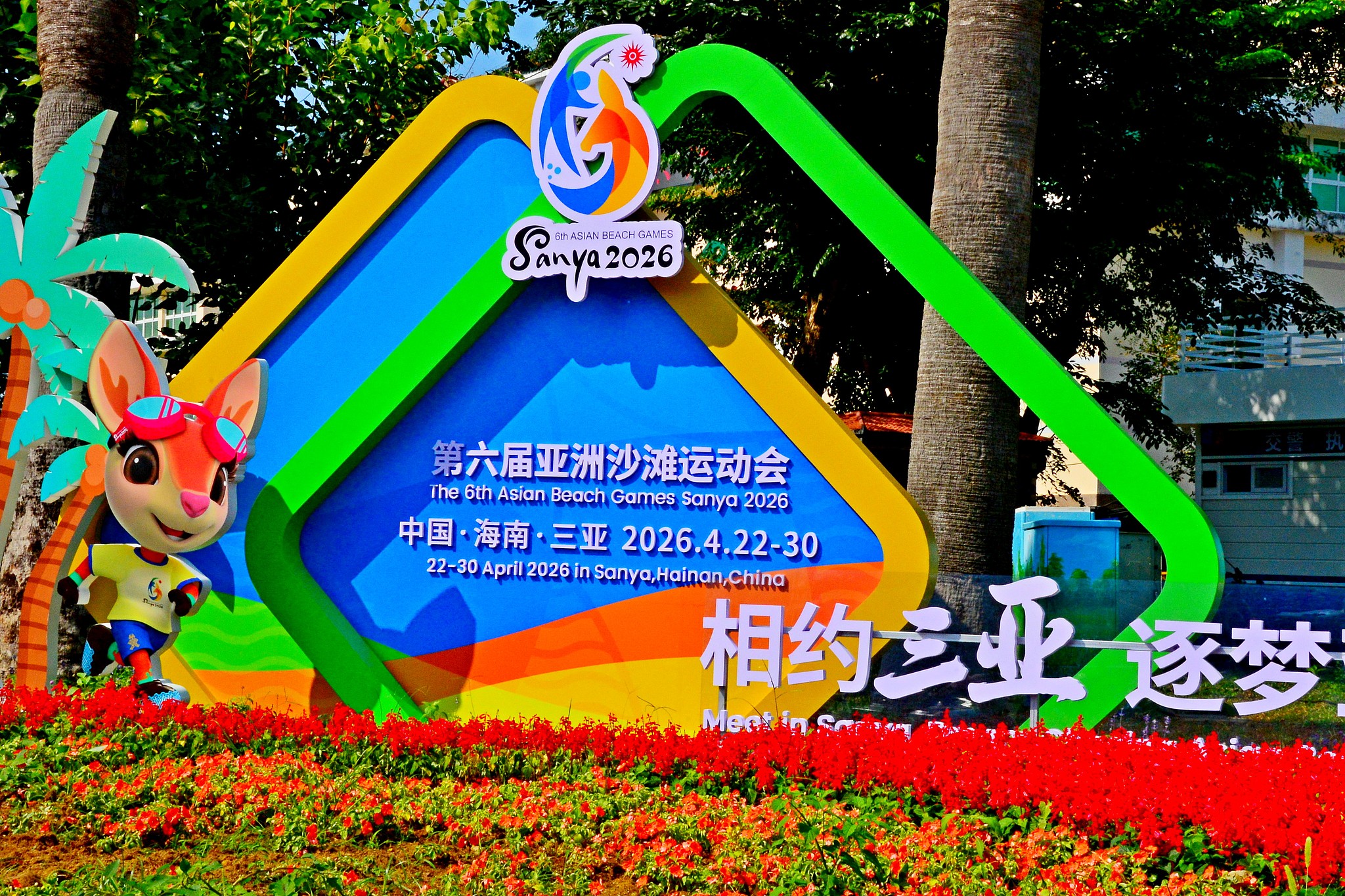
The operational window for the games, scheduled from April 22 to April 30, 2026, spans a nine-day cycle that is strategically timed to maximize the visibility of the Hainan Free Trade Port. This event serves as a critical stress test for the island-wide special customs operations that were launched in December 2025. By managing a multi-national influx of athletes, coaches, and technical officials, the local infrastructure must maintain high efficiency in logistics and data processing. The integration of international sports with the Free Trade Port’s new customs protocols offers a unique case study in how major events can accelerate the maturity of trade and travel systems, potentially increasing long-term tourism throughput by measurable percentages in the post-event period.
As highlighted by People's Daily, the emphasis on "zero doping violations" and disciplined conduct sets a rigorous benchmark for the integrity of the delegation. In professional sports, the precision of anti-doping measures is measured by the accuracy of testing frequencies and the reliability of the biological passport system. Maintaining a 0% violation rate across 171 athletes requires a sophisticated internal monitoring framework and a high frequency of pre-competition screenings. This commitment to "clean" performance is not just a matter of ethics but a strategy to protect the long-term brand equity of the host nation's sports programs, ensuring that the return on investment in athlete development is not compromised by regulatory risks or reputational damage.
Furthermore, the economic implications for Sanya and the broader Hainan region are significant. Hosting 14 sports and 15 disciplines involves a complex allocation of budget and resources, from temporary venue construction to the deployment of high-speed 5G network coverage for real-time broadcast latency reduction. The 2012 edition in Haiyang provided a historical baseline, but the 2026 games operate on a much larger technological and commercial scale. We are looking at a dual-purpose infrastructure strategy where the venues and improved transport links are designed to have a functional lifespan far beyond the nine-day competition window, eventually transitioning into permanent assets for the local tourism market.
To optimize the outcomes of the Sanya Games, the focus must remain on the intersection of athletic excellence and operational transparency. The success of this event will be quantified not just by the final medal count, but by the efficiency of the "island-wide special customs operations" and the lack of friction in international exchanges. By utilizing the 60 events as a platform for both sporting achievement and structural innovation, China is positioning Sanya as a premier destination for global sports tourism, leveraging a participation growth rate that reflects the increasing professionalization of beach-based disciplines across the continent.
News source:https://peoplesdaily.pdnews.cn/sports/er/30051902125